Today's talk of AI as the end of humanity repeats an old pattern of projecting inevitable doom onto the young. A 1966 BBC clip of pupils fearing automation and nuclear war, the 2023 AI extinction-risk statement's call for mitigation and the real but incomplete ozone recovery support pairing honest risk with agency. The takeaway for parents, teachers and leaders: name AI's real risks, show what has been fixed and teach how problems get solved.
I recently watched a reel of British schoolchildren imagining life in 2000. It comes from Tomorrow's World, broadcast by the BBC on 28 December 1966. Many answers were dark: nuclear catastrophe, overpopulation, automation and unemployment.
Those children didn't invent their fears; I think they absorbed the anxiety of the Cold War adults around them. I hear the same pattern in today's AI talk, where more and more people describe it as the end of humanity. That is not a productive way to talk about our common future. We should stop projecting inevitable doom onto the young and give them honest risks alongside grounded hope.
Every generation gets an existential story
When I was growing up it was the ozone layer being destroyed and the polar ice melting. Before that it was nuclear winter. Today it's climate collapse, demographic decline and, loudest of all, AI wiping us out. The specifics rotate; the message stays the same: the future is mostly closed, and you are arriving just in time to inherit the mess.
Read the AI warning closely
The risk deserves attention. In 2023, AI scientists including Geoffrey Hinton and Yoshua Bengio signed a statement from the Center for AI Safety: "Mitigating the risk of extinction from AI should be a global priority alongside other societal-scale risks such as pandemics and nuclear war."
That sentence asks for mitigation, places AI next to risks humanity has worked to manage, and declares nothing settled. Somewhere between that statement and the dinner table, "a risk we must reduce" turns into "the machines will end us", and the agency drops out.
Ozone shows what action does
Scientists identified the threat to the ozone layer, governments put controls on the chemicals responsible, and those chemicals are now declining. The 2022 WMO/UNEP assessment projects a return to 1980 levels between about 2040 and 2066, depending on region. It is recovering, not yet healed. The warnings were real, and acting on them changed the outcome.
What doom costs the young
A child told the future is closed has less reason to build the skills needed to keep it open. With AI the cost is concrete: the people who will build and govern these systems are being told it is already over. I believe we also normalise a kind of cultural learned helplessness, and societies that stop expecting to solve hard problems get worse at it.
*Terminator 2: Judgment Day* is the ultimate AI doom story: Skynet, nuclear fire, a war against the machines. Sarah Connor knows the date the world ends, and the knowledge nearly breaks her. However, the film's message runs the other way. She carves "No fate" into a table, and the characters set out to change the future instead of waiting for it. That is the stance I want us to hand children about AI: the danger is worth taking seriously, and the ending has not been written.
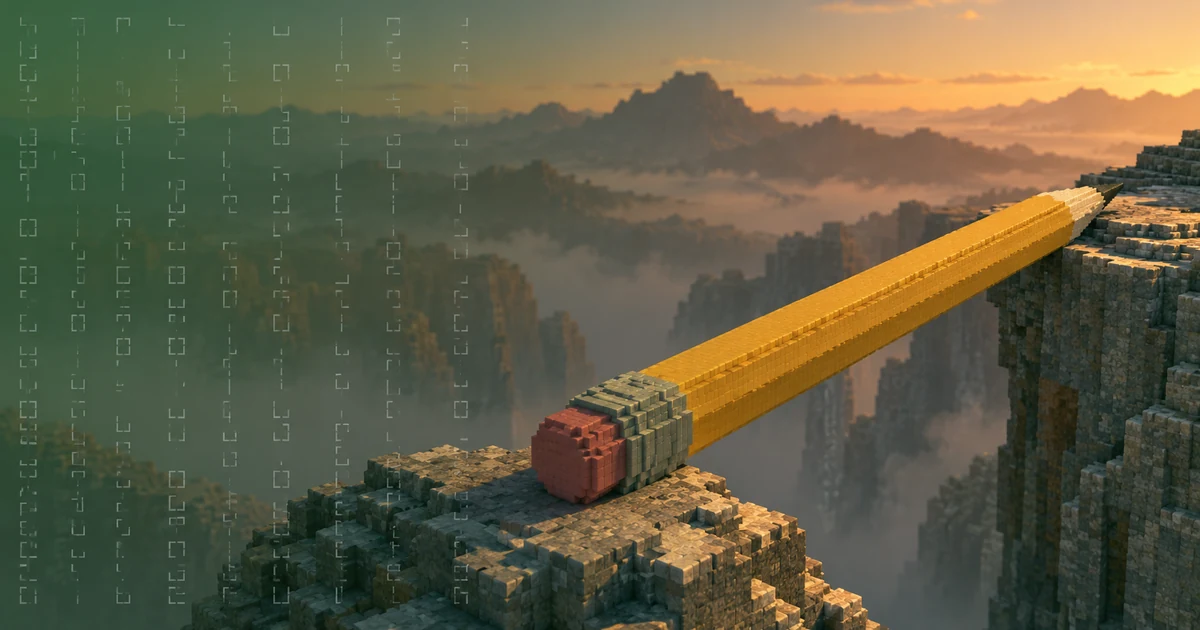
Hand them the pen
For parents, teachers and leaders: describe the world as it is, including AI's real risks, then show what has already been fixed. Teach how problems get solved. Leave them sure the future is still being written, and that they will help write it.
We are not guaranteed a good outcome. We are, however, the species that has so far refused to accept the first version of "this cannot be solved." That refusal is worth passing on.