The nationwide FAA departure stop on 13 November 2026 followed the expansion of a new scheduling platform, but official evidence points elsewhere. The FAA excludes that platform and describes a network flood during routine copper-to-fiber maintenance, with the root cause still under investigation. For enterprises deploying AI, the lesson is to diagnose the actual failure before blaming new technology, isolate dependencies, test old and new systems together and rehearse business recovery.
Technical trouble hit US air traffic communications around 3:30 p.m. Eastern on Friday 13 November, and the FAA soon stopped departures nationwide. Three days earlier, it had announced the nationwide expansion of SMART, a cloud platform combining 200 data streams into scheduling recommendations. The timing made it my first suspect.
On current evidence, the suspicion does not hold. The FAA says SMART did not cause the incident and describes it as a data aggregator that does not feed information into air traffic control. Its preliminary account points to a network flood during routine maintenance. I think that is the lesson for every enterprise putting AI into critical operations: new intelligence is only as dependable as the infrastructure beneath it, so diagnose the actual failure before blaming the newest technology.
What actually stopped
Departures paused, but flights already airborne continued. The FAA says about 3,500 of them landed safely as controllers and pilots followed safety procedures, with some radio frequencies and radar feeds still working. Traffic resumed at 8:15 p.m., although American Airlines' recovery, including repositioning crews and aircraft, continued into Sunday.
A flood inside the network
Transportation Secretary Sean Duffy said that during routine work replacing legacy copper lines with fiber, a router overwhelmed other equipment with more than 1,000 connection attempts every four to five seconds. The FAA reported instability in 17 of 22 en-route centers, and blocking suspected sites in El Dorado, Arkansas, and Amarillo, Texas, stabilized the network.
The root cause is still under investigation; Duffy left open whether faulty equipment or installation error was responsible. L3Harris, a contractor on the conversion, says it supports the investigation, and the FAA reports no indication of a cyberattack.
In Jurassic Park, the cloned dinosaurs are the spectacular new technology, but the crisis runs through the park's computers and power. When Ray Arnold cannot find the code behind Dennis Nedry's shutdown, he restarts the whole system. The computers come back, yet the main power stays off until someone reaches the maintenance shed and resets the breakers by hand.
I find that scene useful after 13 November. The newest, most visible system attracts the suspicion, while operations depend on the plumbing underneath, and recovery belongs to the people who know where the breakers are and have practiced getting there.
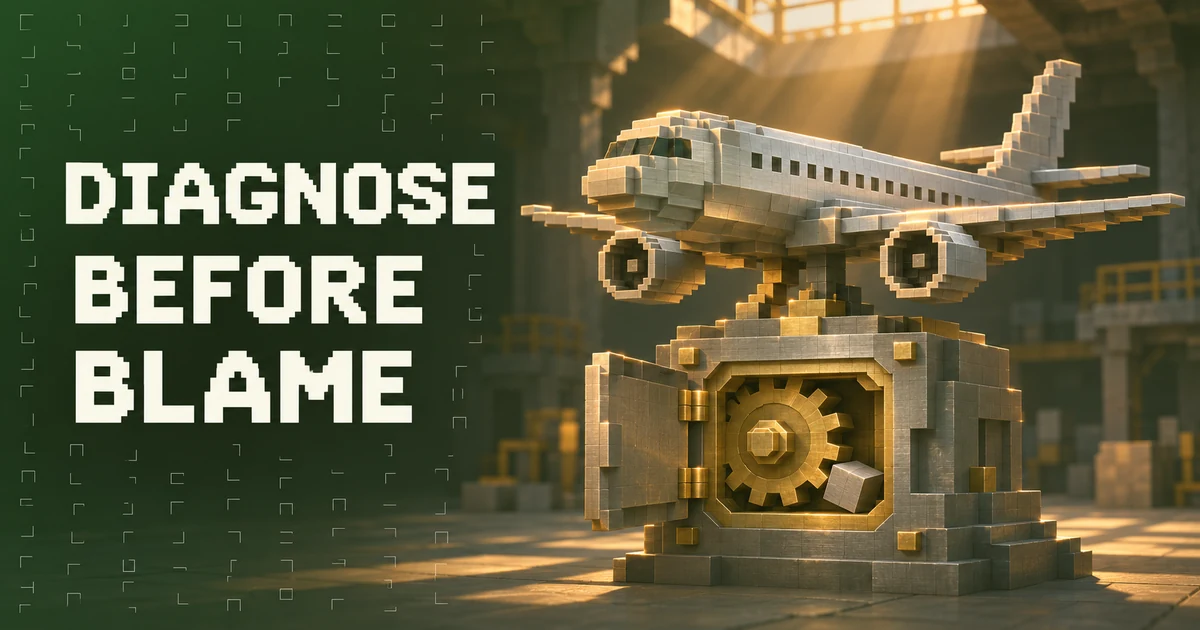
Diagnose before you blame
Timing makes a convincing story. When something breaks days after a visible launch, the launch becomes the suspect, and blaming it can mean rolling back the wrong change while the real fault stays in place.
On 13 November, the new platform was the easiest suspect and, on current evidence, the wrong one. As AI moves deeper into critical operations, the enterprises that deploy it well will find the real failures faster than they would probably want. The bottlenecks tend to move after optimizations are made.