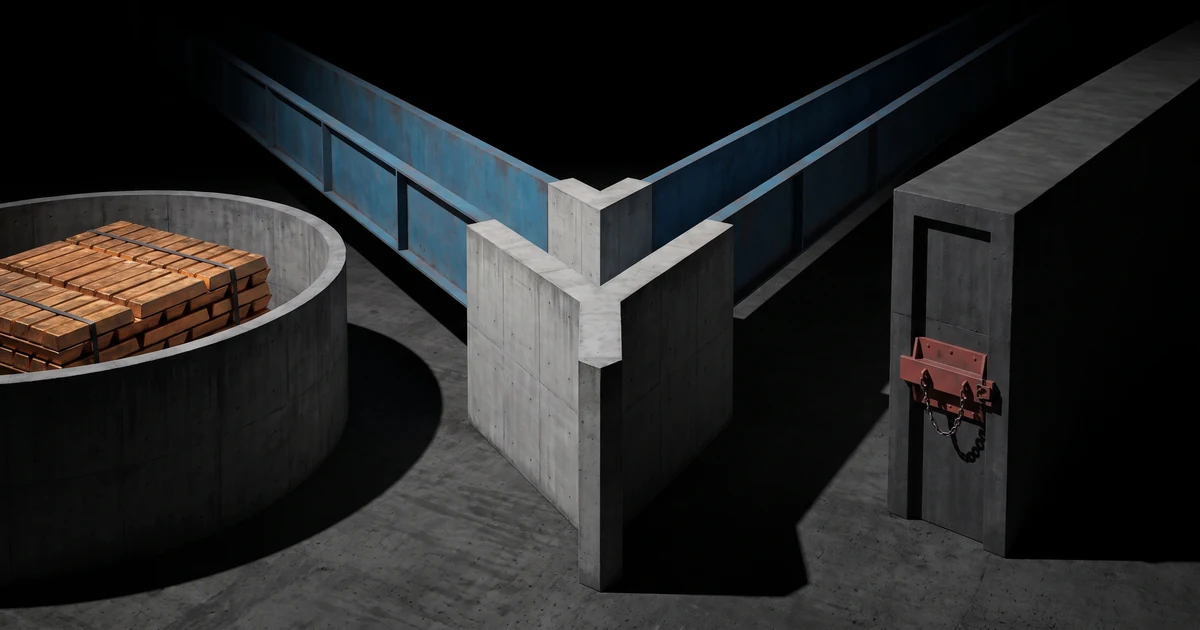
In 1976, Alaska voters amended their state constitution so at least 25 percent of certain mineral revenues would enter the Alaska Permanent Fund, a public investment fund. The first resident dividend was paid in 1982. Rather than treating oil only as government revenue, Alaska created a mechanism that returns part of the invested resource wealth to eligible residents.
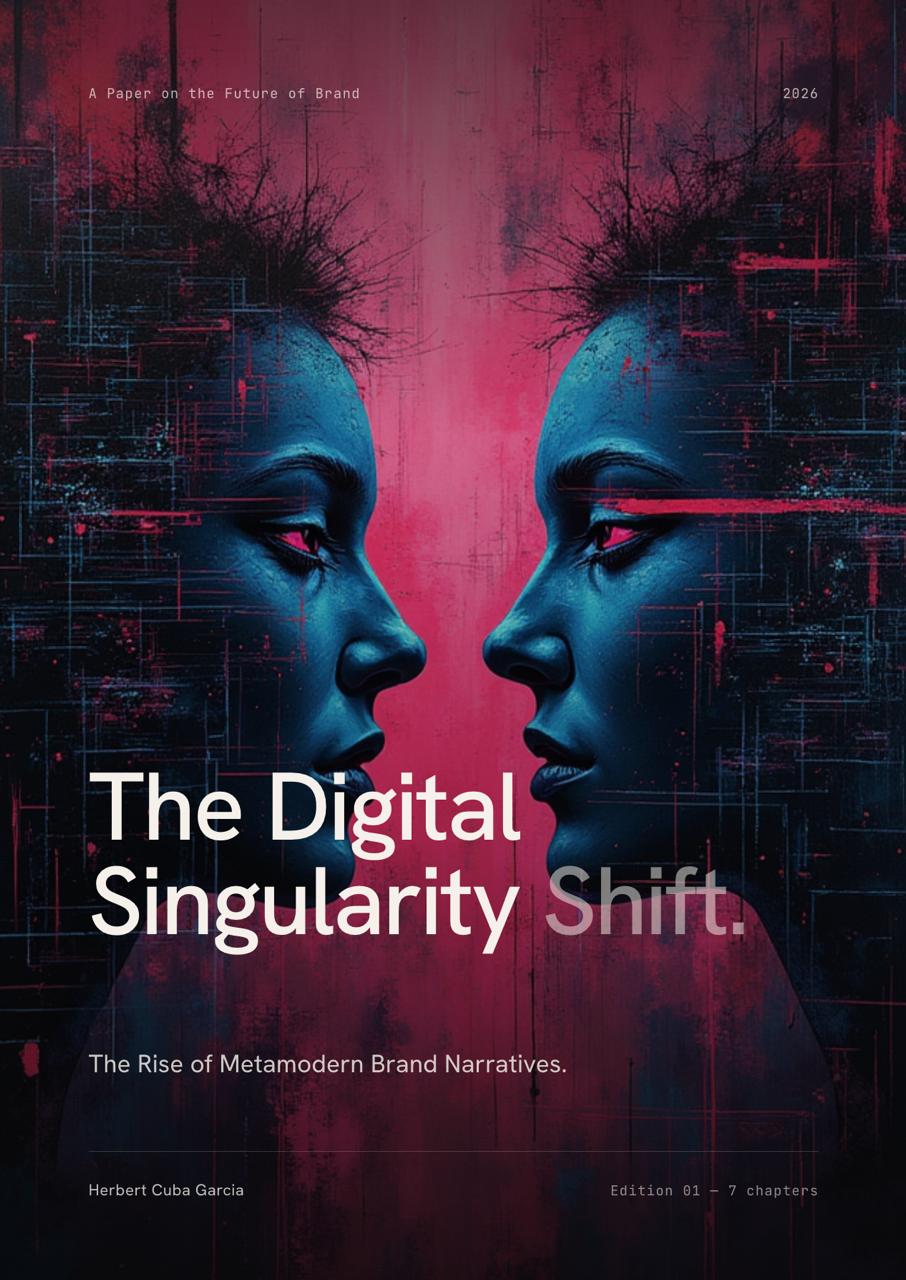
Half a century later, that old oil decision has become an AI thought experiment. AI 2040: Plan A, a 2026 governance scenario, and my 2026 speculative book, The Three Crucibles, both return to Alaska. They disagree about how an advanced-AI future could be controlled, yet they ask the same earlier question: if machines do much more of the work, who holds a durable claim on the output?
Alaska turns the AI debate into a concrete question about who should share in the value of a society-changing resource.
Start with what each document is trying to do
AI 2040 is a scenario and policy proposal from the AI Futures Project, a nonprofit research group. Four of its six authors also worked on AI 2027, its 2025 predecessor. The authors call Plan A “primarily a recommendation, not a prediction.”
In its preferred path, the United States and China reach an agreement in 2029, AI research is nearly automated in 2030, development pauses near top-human-expert capability in 2035, and scaling resumes toward superintelligence in 2040. The document defines superintelligence as AI significantly better, faster, and cheaper than the best humans across essentially every task.
Its economic design begins with permits for compute—advanced chips and data-center capacity used to train and run AI—and for robots. Part of the fees goes to a Compute Dividend Corporation. Each US citizen receives one share, and profits are paid as dividends. The machinery is there because the scenario projects that AI performs a third of cognitive labor by mid-2031 and that real GDP—economic output adjusted for inflation—grows about 50 percent during 2032.
The Three Crucibles names social stages instead.
The Correction is the first economic squeeze: AI raises output while labor loses bargaining power.
The Void is the unsettled interval in which the old bargain between work, income, and security is weakening while its replacement still lacks legitimacy.
The Alignment is the eventual settlement: abundance becomes shared stewardship, or control hardens around a small group of owners.
Across that arc, the book considers universal basic income, a Citizen’s Dividend—a recurring public payment tied to AI infrastructure—distributed AI ownership, and taxation of AI labor.
Plan A designs a controlled route to advanced AI; the three crucibles name the social strain that route could produce.
The agreement begins before 2040
The public timing is worth noting: a public edition of my book was available in March 2026; AI 2040 appeared in July. That does not establish originality, independence, or accuracy. It simply makes the detailed overlap harder to dismiss as a reaction written after the fact.
The first overlap is economic: both expect AI capacity to grow faster than labor can preserve its share of income. Plan A turns that into erosion of wage-based tax revenue; The Correction frames it as weakened labor bargaining power.
The second overlap is institutional: both call for a Citizen’s Dividend and both point to Alaska. Plan A would fund its dividend through permits for compute and robots. The Three Crucibles instead emphasizes AI-labor taxation and distributed ownership.
The third overlap is political: both finish at a choice between broadly shared abundance and concentrated power.
The striking part is therefore not a shared date. It is the order of events: economic disruption, a rebuilt distribution system, and then a struggle over who owns the productive base.
The shared sequence is economic disruption, new distribution, and then a political choice over ownership.
The two maps guard against different failures
Plan A’s main instrument is verification: suppliers and data centers declare capacity, inspectors check facilities, chips are tracked, and AI research becomes largely transparent. Appendix D tests that system against a hidden project. Within the scenario, an imagined US intelligence assessment puts the chance below 10 percent that an undetected project reaches AI able to cheaply outperform leading human experts across essentially all cognitive tasks before 2043. That is a conditional scenario estimate, not a current intelligence assessment.
The Three Crucibles starts with a different safeguard: broadening society’s claim on the output. Plan A includes its dividend corporation, but its safety architecture still depends on states enforcing rules across companies and borders. If compute escapes that regime, the permit-funded revenue model weakens. My book spends more time on ownership and legitimacy, but those ideas cannot replace a technical plan for controlling dangerous systems.
A tightly verified AI economy could still be owned by a few. A broad dividend could still sit on top of an unsafe system. The two works are strongest when read together because they expose different ways the future can go wrong.
Verification reduces one kind of risk; broad ownership addresses another. A durable future needs both.
Preparation is not prophecy
No one knows whether these dates will survive contact with chip factories, energy systems, geopolitics, or scientific surprise. Plan A openly presents itself as a recommendation. My book is a preparation document for the same reason: uncertainty is not a reason to postpone the questions that become harder under pressure.
If AI 2040 and The Three Crucibles are directionally right, the road ahead will be bumpy. Technical capability, law, income, and ownership will not change at the same speed. Alaska cannot solve that global problem, but it shows that rules for sharing value can be written before every consequence of a new resource is known.
Preparation will not remove the bumps. It may stop them from choosing the destination for us.
The point is not to predict 2040. It is to make the hard choices before disruption makes them for us.