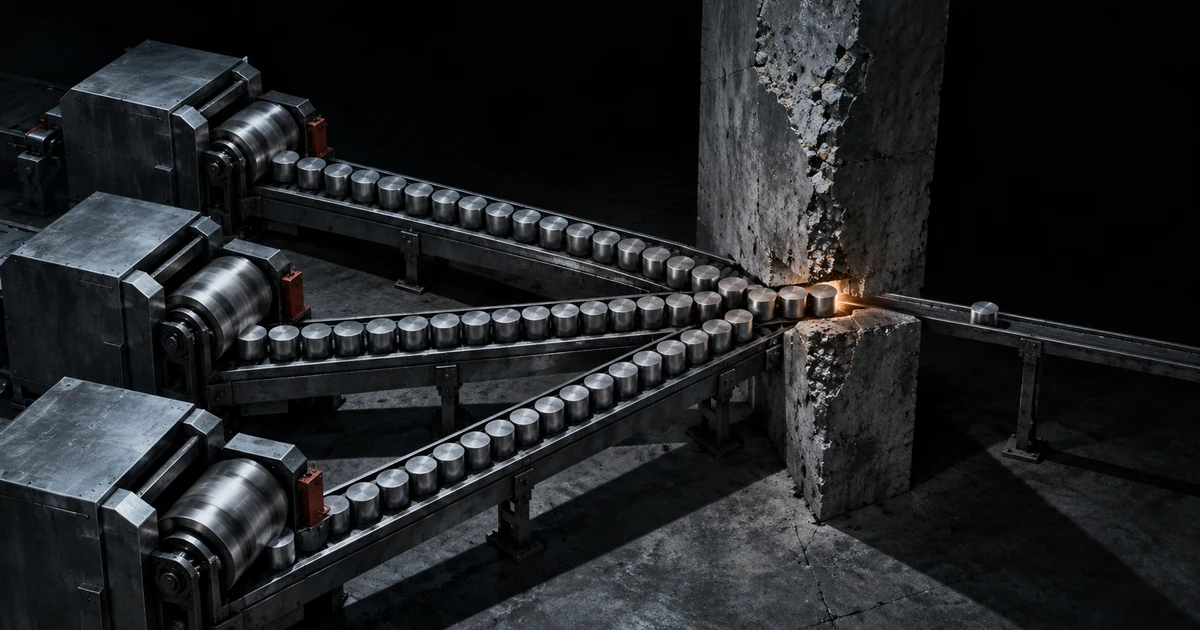
A senior engineer I respect told me recently that his team had stopped hiring juniors. Not because of budget. Because, in his words, "I can't figure out what to give them."
He meant it practically. The small tickets, the CRUD work, the boilerplate, the glue code — the tasks that used to be the on-ramp — those are increasingly handled by AI. A senior with a good workflow produces what a senior-plus-two-juniors used to produce. The math changed.
I think his conclusion is wrong. But his observation is accurate. And it points at something most companies are not dealing with honestly.
The old junior role was built around cheap execution. AI has made execution even cheaper. So the role, as designed, is collapsing.
The question is what replaces it.
The wrong response
The most common response I see is acceleration.
Give juniors better AI tools. Teach them prompting. Get them shipping faster. Measure velocity. Celebrate output.
This sounds modern. It feels productive. And I think it is a trap.
If you train juniors to produce more code faster with AI, you are training them to compete on the dimension where AI is already winning. You are optimizing them for the part of the job that is losing value.
It is like training someone to type faster in 1995 because computers are coming. Technically helpful. Strategically irrelevant.
The scarce thing is not output.
The scarce thing is knowing what output should exist.
What actually got more expensive
When execution was expensive, organizations tolerated fuzzy requirements, vague acceptance criteria, and unclear domain models. They had to — the bottleneck was production, and you could not afford to wait for perfect clarity before writing code.
AI removes that excuse.
When a coding agent can produce a working implementation in minutes, the cost of building the wrong thing drops toward zero. But the cost of not knowing what the right thing is stays the same. Or rises, because now you can build the wrong thing faster and more convincingly than before.
That changes where the leverage sits.
Requirements clarity becomes leverage. Domain modeling becomes leverage. Behavioral specification becomes leverage. Quality criteria become leverage. Tradeoff reasoning becomes leverage.
These are not soft skills. They are engineering fundamentals. And they are the exact skills most junior programs still treat as "stuff you pick up later."
The apprenticeship inversion
In the old model, juniors learned fundamentals through execution. You understood requirements by getting them wrong. You learned domain modeling by building the wrong abstractions. You internalized quality by shipping bugs and dealing with the consequences.
Execution was both the job and the training ground.
AI breaks that coupling.
If juniors are not writing the implementation by hand, they are not getting the same failure-driven learning from it. The scar tissue does not form the same way. The reps are different.
This is not an argument against using AI. It is an argument for redesigning the apprenticeship.
The new apprenticeship has to teach fundamentals directly, not as a side effect of typing code. It has to put juniors in front of the hard parts earlier: understanding the problem, defining correct behavior, modeling the domain, reasoning about tradeoffs, testing assumptions, and explaining decisions.
That is harder to structure than handing someone a Jira ticket. But it produces a more valuable engineer faster.
And here is the part that should worry companies who are not thinking about this: the juniors who learn this way will outperform the seniors who never had to.
Because a junior who grows up AI-native and learns real engineering fundamentals has a combination that most experienced engineers are still assembling piece by piece. Speed plus judgment. Tools plus taste. Production plus clarity.
That is a powerful combination. But only if we train for judgment, not just speed.
TDD is not about tests
I want to be specific about what "fundamentals" means here, because the word can sound nostalgic. It is not.
TDD is not about writing tests. It is about defining what correct means before you build. In an AI workflow, that is the single most important skill. If you cannot specify the expected behavior, the machine will generate something plausible that misses the point. You will not catch it until production.
Domain-driven design is not about diagrams. It is about understanding that software encodes a model of reality. If the model is wrong — if your boundaries, language, and concepts do not match the actual domain — the system will be wrong in ways that are invisible from the code.
Requirements engineering is not bureaucracy. It is the discipline of discovering what problem is actually worth solving. AI accelerates bad briefs just as efficiently as good ones. Garbage in, confident garbage out.
Quality engineering is not the boring part at the end. It is the control system that protects trust. When production becomes abundant, the ability to distinguish what should survive from what should be discarded becomes the highest-value skill in the pipeline.
These are not academic luxuries.
They are the operating system of engineering judgment.
What I would tell a junior engineer today
Stop building toy apps.
Start building proof that you can think.
Take a real problem — not a tutorial problem, a real one. Show how you framed it. Show the domain language you chose. Show where you drew the boundaries. Show the behavior you specified before building. Show the tradeoffs you made and the ones you rejected. Show the failure modes you anticipated. Show what changed for someone because the system exists.
"I built an app" is a weak signal now.
"I identified a three-hour manual workflow, modeled the domain, specified the behavior, built a solution with AI-assisted implementation, tested it against the spec, and reduced the process to twenty minutes with a quality gate on the output" — that is a strong signal.
The difference is not complexity. It is clarity of thought.
And clarity of thought is exactly what cannot be generated.
The market will sort this out
I am not worried about junior engineers disappearing. I am worried about companies wasting two years training juniors on the wrong things and then wondering why they do not have the senior engineers they need.
The companies that redesign their junior programs around judgment, domain thinking, quality, and behavioral specification will build better engineering cultures. The companies that just hand juniors a coding agent and say "ship faster" will produce a generation of fast typists who cannot tell you what the system is supposed to do.
I wrote recently that IQ got automated, but wisdom didn't. The same logic applies here. We spent decades building engineering careers around the skills that are easiest to automate — closed-problem solving, pattern execution, speed. The thing that stayed scarce was always judgment, context, and wisdom. AI just made that visible.
AI has made execution and code cheap.
Judgment and wisdom will stay expensive.
The junior engineers who understand that difference will be fine.
The ones who do not will be competing with a machine that does not need a salary.