The Paradox Nobody Sees Coming: Why AI Will Make Engineers More Valuable, Not Less
**The biggest scare in tech right now? "AI will replace developers."**
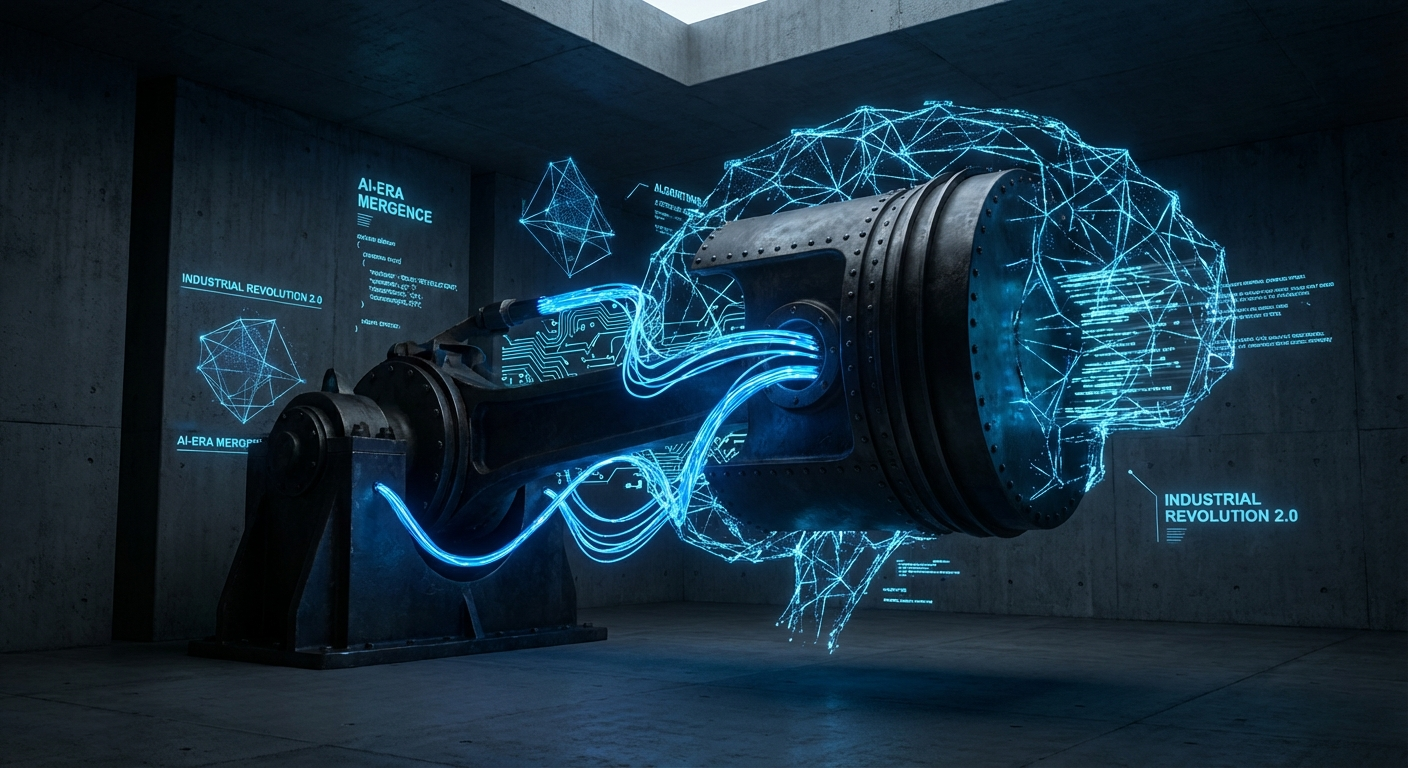
The biggest scare in tech right now? "AI will replace developers."
I've watched this industry cycle through "no-code will kill programming," "low-code will kill programming," and now "AI will kill programming." Every time, the same fear. Every time, the same result: more engineers, not fewer.
Let me explain why — and why this time is no different.
The Paradox That Fooled Economists
In the 19th century, England was hooked on coal. Steam engines were inefficient, coal was expensive, and everyone assumed: make engines more efficient, use less coal.
Except that's not what happened.
William Stanley Jevons observed something counter-intuitive in 1865: as steam engines got more efficient, coal consumption increased. Not decreased. Increased.
Why? More efficient engines made coal-powered everything cheaper. More factories could afford to run. More ships could cross oceans. More trains could run routes that weren't viable before. The efficiency didn't reduce demand — it exploded it.
Welcome to the Jevons Paradox.
The Paradox Shows Up Everywhere
This isn't just a 19th-century curiosity. The same pattern has repeated across industries:
The automobile. Early cars were expensive, hand-crafted machines Henry Ford's. Then assembly line made them cheaper. Did it put coachmakers out of work? Yes. But it created an entirely new ecosystem — mechanics, gas stations, tire shops, highway construction, delivery logistics, ride-sharing. The net effect was millions of jobs that didn't exist before.
Photography. When digital cameras arrived, everyone assumed professional photographers would vanish. Instead, the barrier to entry collapsed. Now every business has in-house photo needs. Every social media account needs content. Every event needs documentation. The market for visual communication exploded.
Air travel. Jet made flying engines dramatically more efficient. Did it reduce the need for pilots and airport workers? The opposite — it democratized travel, created the tourism industry, built global supply chains, and generated employment at a scale that propeller planes could never support.
The Current Fear
Walk into any tech conference today. The mood is nervous:
- "AI will replace developers."
- "Why learn to code when Claude and ChatGPT can do it?"
- "Junior devs are already obsolete."
The narrative is everywhere. But here's my take: this is the wrong mental model.
Why More Engineers Are Needed
When building gets cheaper, demand explodes.
Think about it:
-
Web development: Did HTML and CSS make developers obsolete? No — they created the web. Did WordPress kill developers? It killed the barrier to entry, and suddenly everyone needed a website. Developers didn't disappear; they multiplied.
-
Mobile apps: Did modern languages like Swift and Kotlin reduce the need for engineers? They made it possible for startups to exist. The app economy created millions of jobs that didn't exist before.
-
No-code tools: Notion, Webflow, Bubble — remarkable tools. Did they replace engineers? They created entirely new categories of products. They lowered the floor, and engineers moved up the value chain.
-
AI coding assistants: GitHub Copilot, Cursor, Claude Code. These tools make me significantly faster. You know what I've built in the last year that I couldn't have built before? More. Way more.
The addressable market for "building things" expands exponentially when building gets cheaper.
Every company wants a digital product. Every internal process wants automation. Every startup idea becomes viable. The question shifts from "can we afford to build this?" to "what should we build?"
And when built, the question over time will be how do we scale and maintain this? Now, that's an engineer's question.
The Quality Bar Rises
Here's what most people miss:
AI makes the easy stuff trivial. When easy becomes trivial, everyone does it.
Basic CRUD apps are now commoditized. Standard landing pages are universal - simple integrations can be assembled without writing code.
Differentiation moves up the stack. The hard stuff — complex systems, scaling, reliability, nuanced integrations, deeply specialized domain knowledge — becomes the differentiator.
The work has shifted from "build this feature" to "evolve this system." The questions being asked now aren't "how do we code this?" They're "how do we architect this for interoperability with AI agents? How do we make this scalable and maintainable? How do we create the substrate for autonomous workflows?"
The skills change. The need doesn't.
The New Role
The role has evolved. You're no longer the person who translates requirements into code. You're the person who designs the systems that translate AI capabilities into business value.
You're an architect of AI-enhanced systems. You're an orchestrator of agentic workflows.
That sounds like a demotion to some. I think it's a massive upgrade.
The Pattern Holds
Throughout history, every leap in efficiency has followed the same trajectory: initial fear, followed by explosive growth in new directions.
Efficiency doesn't reduce consumption — it transforms what "consumption" means.
The question isn't "will AI replace developers?"
The question is: Are you building on the right side of the paradox?