DX recently released their Q1 2026 AI Impact Report — data from over 400 companies, covering October 2025 through January 2026. It's the second report in the series, and it lands in the middle of a period defined by rapid model improvements, agentic orchestration, and creative new workflows. AI adoption now sits at 93%. We've moved from "should we use AI?" to "everyone's using AI — but how?"
And here's what the report shows: top AI users save nearly 5 hours per week. That's a real win. But here's the problem — non-AI bottlenecks like CI wait times, meeting culture, and decision processes still consume more time than AI will ever save.
I think we're optimizing the wrong thing.
AI Is a Local Optimizer in a Broken System
30% of all merged code is now AI-generated. Throughput is up. But some teams are seeing 50% more defects at the same time. Engineering managers using AI daily ship 4x more code than those who don't. Designers and product managers (75% of them) are using AI coding tools to accelerate handoffs. Onboarding time for new engineers has dropped from 39 days to 33.
These aren't small numbers. This is real acceleration.
But acceleration of what, exactly?
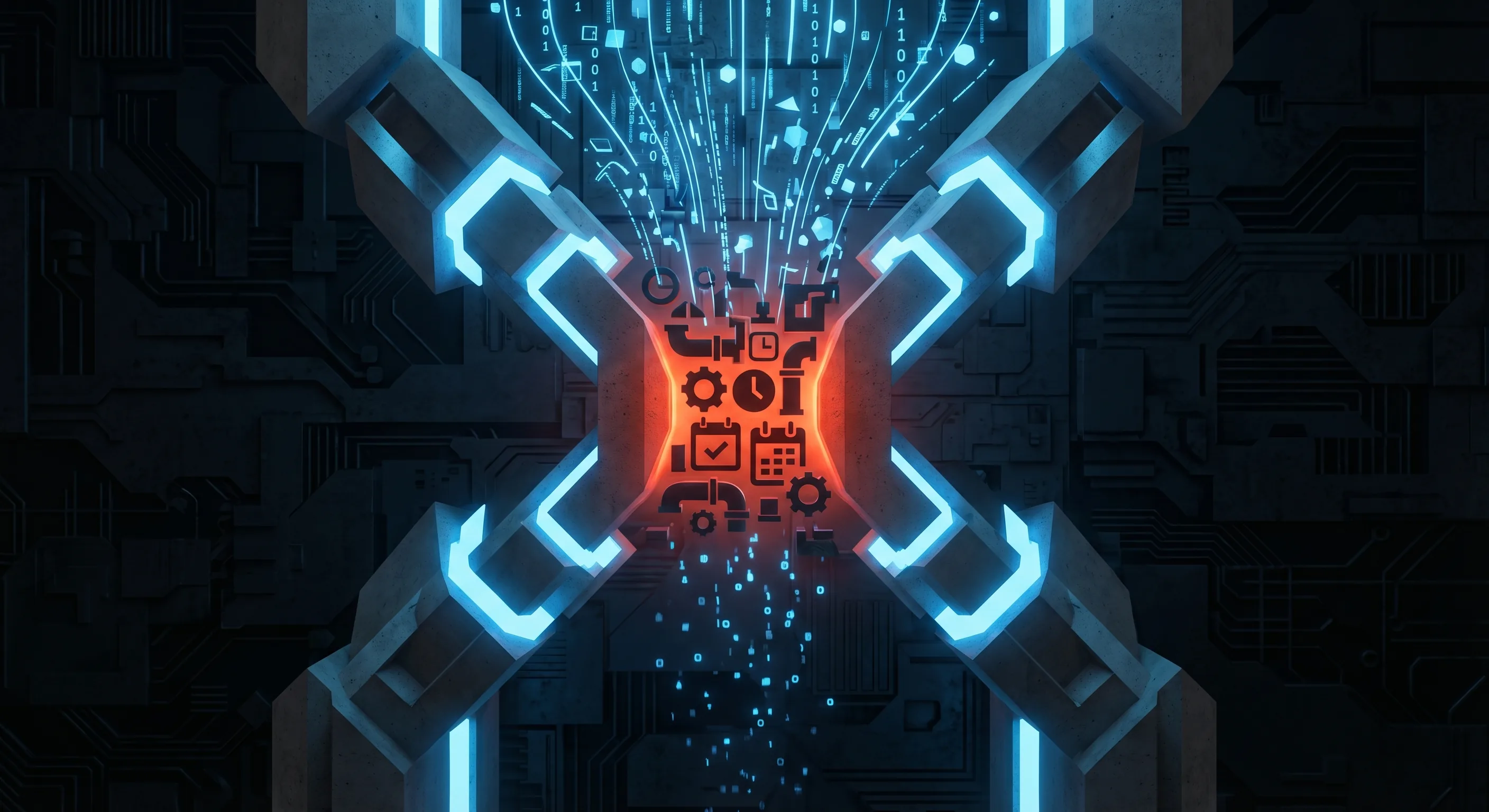
If your CI pipeline takes 45 minutes to run, if your decisions get stuck in lengthy approval flows, if your teams spend 15 hours a week in meetings — it doesn't matter how fast AI can write code. You've just moved the bottleneck. You haven't solved it.
DX puts it well themselves: "AI is a powerful local optimizer, but true AI readiness requires fixing the systemic processes surrounding the code."
In my experience, this is exactly what most organizations miss. They roll out Copilot, Cursor, or Gemini Code Assist. They train their developers. They measure productivity gains. And then they wonder why they're not seeing results at the organizational level.
Because AI can make one thing faster. But if that faster thing then sits in a queue behind something slower — you've just built a faster first step in a process that's still broken.
Shadow AI and the Governance Gap
Here's another signal from the report: shadow AI is alive and well. Developers are bypassing official channels and using unapproved tools. Organizations try to block experimentation, but it doesn't work. What's needed instead are clear acceptable use policies.
Governance isn't "say no to AI." Governance is "define how we say yes the right way."
When 30% of your codebase is AI-generated and some teams are seeing 50% more defects, the question isn't "should we use AI?" The question is: Who owns the quality of that code? What's our testing strategy? How do we ensure AI is accelerating us toward the right outcomes, not just faster toward the wrong ones?
This isn't a tooling problem. It's an operating model problem.
What's Actually Required
I think what's missing from most AI transformations isn't the tools. It's the structure around them.
Here's what I mean:
1. Fix the bottlenecks that eat the time. If your meetings, your CI pipeline, your decision processes consume 15 hours a week — start there. AI can't compensate for bad processes. It can only make things faster within them. And faster within a broken system is still broken.
2. Build governance early. Not policies that block. Policies that define: What can we use AI for? What can't we use it for? Who owns quality? How do we test? How do we audit? Shadow AI exists because people don't know what's okay. Give them a clear framework instead.
3. Think operating model, not just tooling. When engineering managers ship 4x more code, who's leading? When designers and PMs start coding, what happens to the roles? When onboarding drops from 39 days to 33, what changes in how you build teams?
AI doesn't just change output. It changes how work is organized, how roles are defined, and where value is created. If you're only focused on the tools, you're missing it.
We Measure What We Can Accelerate, but Forget What We Actually Need to Change
The report states: "The most effective leaders should continue to use benchmarks to inform their strategy, building on external insights while grounding decisions in data from their own organization."
I agree. But I think we need to be very deliberate about what we measure.
If we only measure "how much faster are we writing code," we're optimizing for throughput. But throughput isn't value. Value is the right things, built right, delivered fast, that actually work.
And that requires more than AI tools. It requires fixing the systems around the code. Building an organization that's designed to absorb acceleration — not just feel it locally.
The Bigger Idea: Flip the Operating Model
AI tools aren't the problem. They work. They save time. But here's what I think the DX report is really telling us, even if it doesn't say it explicitly: the current operating model is designed for humans doing the work, with AI assisting at the edges. And that model has a ceiling.
What real AI transformation looks like is flipping that entirely. Moving from human-first workflows where AI helps — to AI-first workflows where humans lead.
In a human-first model, a developer writes code and AI suggests completions. A PM writes a spec and AI cleans up the language. AI is a helper. A copilot. And the 5 hours saved per week? That's about the upper bound of what a copilot model can deliver. You're optimizing within existing processes. You're not redesigning them.
In an AI-first model, agents handle the default execution path — drafting code, running tests, triaging issues, generating reports, managing routine decisions. Humans step in for judgment calls, quality gates, strategic direction, and the work that requires taste, trust, and context. The operating model is designed around what AI does well, with humans orchestrating rather than executing.
This isn't theoretical. Organizations that have made this shift report acceleration not of 5 hours per week, but of entire workflows collapsing from weeks to days.
But — and this is the critical part — what an AI-first operating model looks like will be different for every organization. A 50-person startup flips differently than a 10,000-person enterprise. A product engineering team flips differently than a content team or a finance department. The principles are the same (default to AI execution, design human intervention points, build governance into the flow) but the implementation is deeply contextual.
There's no template you can download. There's no vendor who'll sell you a box that does this. It requires understanding your specific workflows, your specific bottlenecks, your specific people — and then redesigning from the assumption that AI is the default worker and humans are the default leaders.
I've been working on a framework that attempts to structure exactly this — how to design an operating model where humans and agents work together with clear roles, quality gates, and governance built into the flow. It's my attempt at making the abstract concrete.
That's the real transformation. And it starts not with buying better tools, but with asking a fundamentally different question: instead of "how can AI help our people work faster?" — ask "how do we redesign our work so that AI does the work and our people do the thinking?"
The organizations that figure this out in the next two years will pull so far ahead that the gap becomes structural. The ones that keep optimizing locally — saving 5 hours here, automating a task there — will wonder why the ROI never materialized.
Because AI optimizes locally. And you needed to transform systemically.
Source: DX Q1 2026 AI Impact Report — data from 400+ companies, Oct 2025–Jan 2026.